In the demanding world of material handling and industrial lifting, the 1 ton electric winch stands as a pivotal tool for bridging the gap between manual labor and heavy-duty industrial cranes. These machines provide the precise control and mechanical advantage necessary to move loads up to 1,000 kilograms with minimal human effort, making them indispensable in workshops, construction sites, and maritime environments worldwide.
Understanding the technical nuances of a 1 ton electric winch is not merely about knowing its lifting capacity; it is about optimizing operational efficiency and ensuring workplace safety. By integrating powerful electric motors with robust gearing systems, these winches allow operators to execute complex lifting tasks with a level of stability and repeatability that manual systems simply cannot match.
Globally, the adoption of the 1 ton electric winch has transformed how small-to-medium enterprises handle logistics. From the precise positioning of machinery in a factory to the recovery of equipment in remote areas, the versatility of this specific capacity makes it a "sweet spot" for a vast array of commercial and industrial applications.
Global Industry Context of the 1 Ton Electric Winch
The global demand for lifting equipment has seen a steady climb, aligned with the expansion of infrastructure projects in emerging economies and the modernization of manufacturing hubs. According to industry trends aligned with ISO safety standards, the move toward electrification in material handling is driven by the need for higher precision and reduced carbon footprints. The 1 ton electric winch occupies a critical segment of this market, serving as the primary choice for loads that are too heavy for manual hoists but do not require the massive footprint of a gantry crane.
Historically, the challenge in these environments was the trade-off between power and portability. Many industries struggled with cumbersome hydraulic systems that leaked or manual winches that risked operator injury. The widespread implementation of the 1 ton electric winch has addressed these pain points by providing a compact, energy-efficient solution that integrates seamlessly into existing electrical grids, thereby enhancing overall productivity across the global supply chain.
Definition and Core Mechanism of 1 Ton Electric Winches
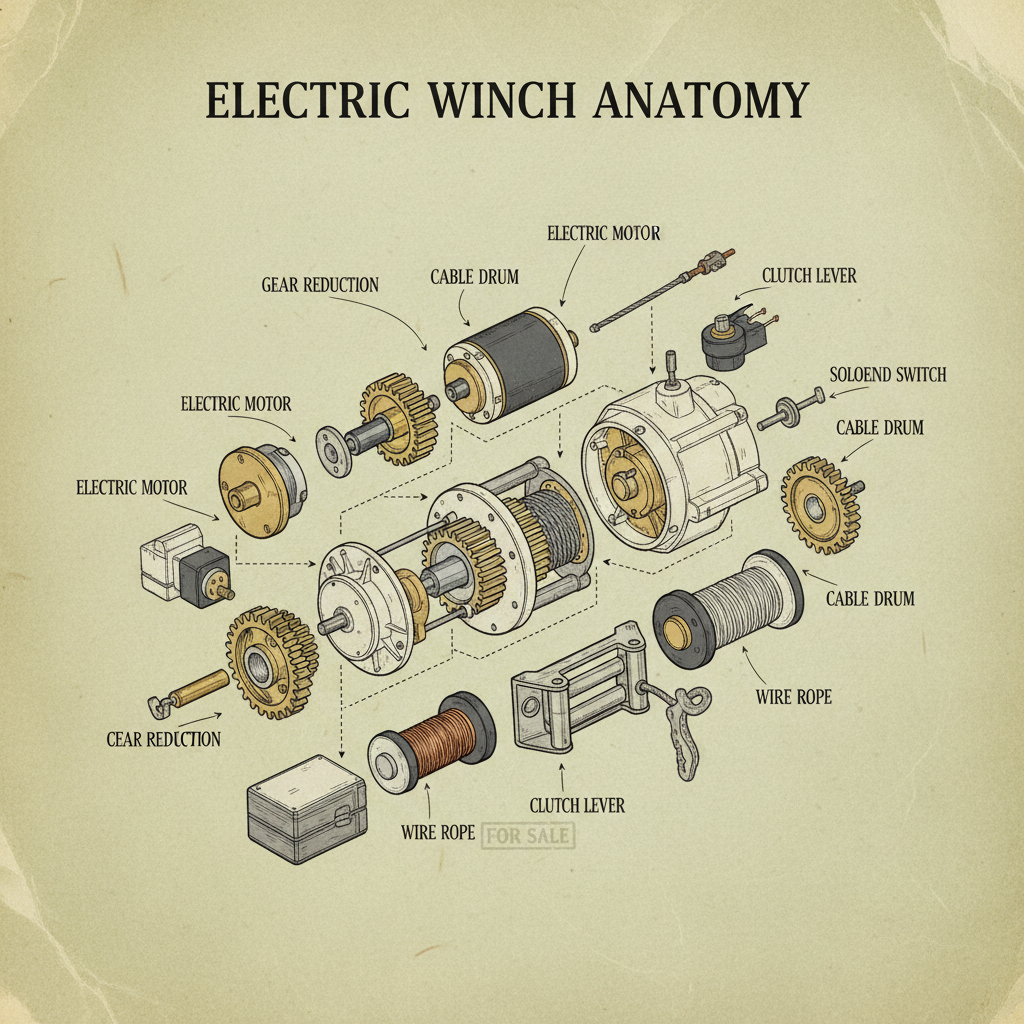
At its core, a 1 ton electric winch is a mechanical device designed to pull or lift loads up to 1,000 kg using an electric motor to rotate a cylindrical drum. As the drum turns, it winds or unwinds a cable—typically made of high-tensile steel or synthetic fiber—which is attached to the load. This conversion of electrical energy into linear pulling force allows for the effortless movement of heavy equipment, automotive components, or construction materials.
Beyond the basic motor, the "magic" of the 1 ton electric winch lies in its gear reduction system. By using a series of planetary or spur gears, the high-speed rotation of the electric motor is converted into high-torque, low-speed rotation at the drum. This mechanical advantage is what enables a relatively small motor to move a massive one-ton load safely and steadily, preventing the cable from snapping or the motor from overheating under stress.
In modern industrial contexts, these devices are often integrated with electronic controllers that allow for "inching" or precise micro-adjustments. This connection to digital control systems ensures that the 1 ton electric winch is not just a brute-force tool, but a precision instrument capable of assisting in delicate assembly tasks or high-stakes recovery operations where a few millimeters can make the difference between success and failure.
Key Technical Factors for High-Performance Winching
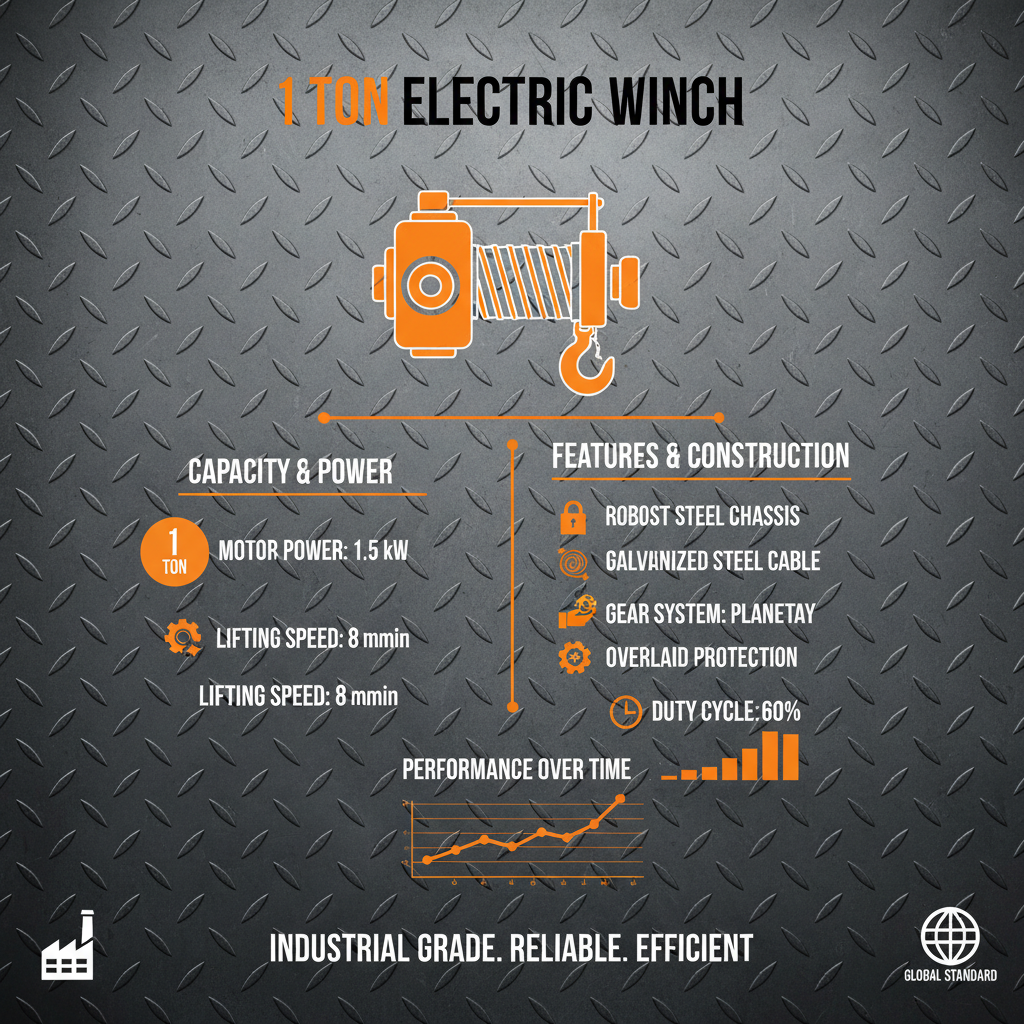
When evaluating a 1 ton electric winch, the first critical factor is Duty Cycle. Not all winches are designed for continuous use; some are rated for intermittent lifting, while others are built for heavy-duty industrial cycles. Understanding the duty cycle prevents motor burnout and extends the lifespan of the internal components by ensuring the machine has adequate cooling time between operations.
Another essential element is Braking Reliability. A high-quality 1 ton electric winch must feature an automatic fail-safe braking system—often an electromagnetic or mechanical disc brake—that engages instantly when power is cut. This prevents the "free-fall" of a one-ton load, which is a critical safety requirement in any environment where personnel are working beneath or near the hoisted material.
Finally, Environmental Protection (IP Rating) determines where the winch can be deployed. For a 1 ton electric winch used in maritime or outdoor construction, a high IP rating (such as IP65 or IP67) is necessary to protect the electric motor and circuitry from moisture, dust, and saltwater corrosion. This ensures that the equipment remains operational even in the harshest weather conditions, maintaining project timelines.
Global Applications and Real-World Use Cases
The versatility of the 1 ton electric winch allows it to be deployed across diverse sectors. In the automotive industry, these winches are frequently used on assembly lines to position heavy engines or chassis components with pinpoint accuracy. In the maritime sector, they are essential for launching small boats, hauling anchors, or securing cargo on decks where space is limited but strength is non-negotiable.
In remote industrial zones, such as mining camps or oil rigs, the 1 ton electric winch serves as a primary recovery tool. When machinery becomes bogged down in mud or trapped in tight crevices, the controlled pulling power of an electric winch allows teams to extract equipment without risking further damage. Similarly, in post-disaster relief operations, these winches are used to clear debris and move heavy structural beams to create safe passage for emergency responders.
Efficiency Comparison of 1 Ton Electric Winch Variants
Tangible Advantages and Long-Term Value
Investing in a professional 1 ton electric winch yields significant long-term dividends in both cost and safety. By automating the lifting process, companies drastically reduce the risk of musculoskeletal injuries among workers, which in turn lowers insurance premiums and minimizes downtime caused by workplace accidents. The reliability of electric power ensures that tasks are completed faster and with more consistency than manual hauling.
From a sustainability perspective, the transition to electric winching reduces the reliance on fossil-fuel-powered hydraulic pumps, contributing to a cleaner workspace. Furthermore, the durability of high-grade steel drums and precision gears means that a well-maintained 1 ton electric winch can serve a facility for decades. This longevity provides a high return on investment (ROI), as the cost of the unit is offset by the massive increase in operational throughput and the reduction in manual labor costs.
Future Trends in Electric Winch Innovation
The future of the 1 ton electric winch is being shaped by the "Industry 4.0" revolution. We are seeing the integration of IoT (Internet of Things) sensors that can monitor cable tension in real-time, alerting operators via smartphone apps before a cable reaches its breaking point. This shift toward predictive maintenance allows companies to replace worn parts based on actual usage data rather than arbitrary schedules, further reducing downtime.
Additionally, the move toward green energy is prompting the development of battery-powered, cordless 1 ton electric winches. By utilizing high-density lithium-iron-phosphate (LiFePO4) batteries, these units provide the same pulling power as grid-tied models but with total mobility. This is particularly revolutionary for field engineers who need heavy lifting capabilities in areas where electrical infrastructure is non-existent.
Automation is another frontier. Future iterations of the 1 ton electric winch will likely feature semi-autonomous "smart-pull" modes, where the winch automatically adjusts its speed and torque based on the resistance it encounters. This will not only increase safety but also allow for the integration of winches into fully automated robotic warehouses and smart factories.
Overcoming Operational Challenges in Winch Deployment
Despite their efficiency, users of the 1 ton electric winch often face challenges related to cable management. Improper spooling—where the cable bunches up on one side of the drum—can lead to "bird-nesting" and premature cable failure. To solve this, expert operators recommend the use of grooved sleeves and cable guides that ensure the wire is wound evenly across the drum, maximizing the winch's lifespan and safety.
Another common issue is power instability in remote sites, which can cause voltage drops and lead to motor overheating. The solution lies in the implementation of Variable Frequency Drives (VFDs) or voltage stabilizers. These devices ensure that the 1 ton electric winch receives a steady stream of power, regardless of the source, allowing for smooth acceleration and deceleration of the load.
Finally, the challenge of "shock loading"—where a sudden jerk is applied to the cable—can exceed the 1-ton rating and cause catastrophic failure. To mitigate this, the use of snatch blocks and dampeners is highly recommended. By distributing the load and absorbing the energy of sudden movements, these accessories allow the winch to operate within its safe working load (SWL) even in unpredictable environments.
Comparative Analysis of 1 Ton Electric Winch Configuration Options
|
Configuration Type
|
Typical Application
|
Durability Score (1-10)
|
Maintenance Level
|
| Standard Industrial |
Factory Assembly Lines |
8 |
Moderate |
| Marine-Grade Sealed |
Docks and Ship Decks |
10 |
High (Corrosion Check) |
| Compact Portable |
Light Construction |
6 |
Low |
| High-Precision VFD |
Laboratory/Medical Equipment |
7 |
Moderate |
| Heavy-Duty Planetary |
Mining and Recovery |
9 |
High (Greasing) |
| Battery-Powered Cordless |
Remote Field Work |
7 |
Low (Battery Care) |
FAQS
Yes, but it depends on the specific design. Some winches are "pull-only" (horizontal), while others are "hoists" designed for vertical lifting. For vertical tasks, ensure your 1 ton electric winch has an automatic load-holding brake to prevent the load from dropping during a power failure.
Cables should be inspected before every single use for fraying, kinking, or corrosion. A comprehensive professional inspection is recommended every 3 to 6 months, depending on the intensity of the duty cycle, to ensure the structural integrity of the steel wire rope.
Exceeding the rated capacity can lead to motor burnout, gear stripping, or cable failure. While some winches have a small safety margin, consistently overloading a 1 ton electric winch will permanently damage the internal components and void the warranty, posing a significant safety risk.
Generally, yes. Electric winches convert power more directly and do not suffer from the fluid friction losses found in hydraulic systems. They are also easier to maintain and do not risk environmental contamination from oil leaks, making them a more sustainable choice for most workshops.
Yes, synthetic ropes are lighter and safer because they don't recoil as violently if they snap. However, they are more susceptible to abrasion. If you switch, ensure the rope is rated for at least 1 ton and use protectors when pulling over rough surfaces.
The best way to prevent bunching is to maintain a slight tension on the cable during the first few wraps of spooling. Additionally, using a 1 ton electric winch with a grooved drum ensures that the cable sits in designated channels, promoting an even wind.
Conclusion
The 1 ton electric winch represents a perfect intersection of power, precision, and practicality. From its role in enhancing industrial safety and productivity to its adaptability across maritime and construction sectors, this tool has proven itself as a cornerstone of modern material handling. By focusing on key factors like duty cycles, braking reliability, and proper cable management, operators can maximize the efficiency and lifespan of their equipment while maintaining the highest safety standards.
Looking forward, the integration of smart sensors and green energy will only further elevate the capabilities of these machines. Whether you are upgrading a factory floor or equipping a remote field site, investing in a high-quality electric winch is a strategic move toward a more automated and safer future. For professional-grade solutions and expert guidance on selecting the right equipment, visit our website: www.lbswinch.com