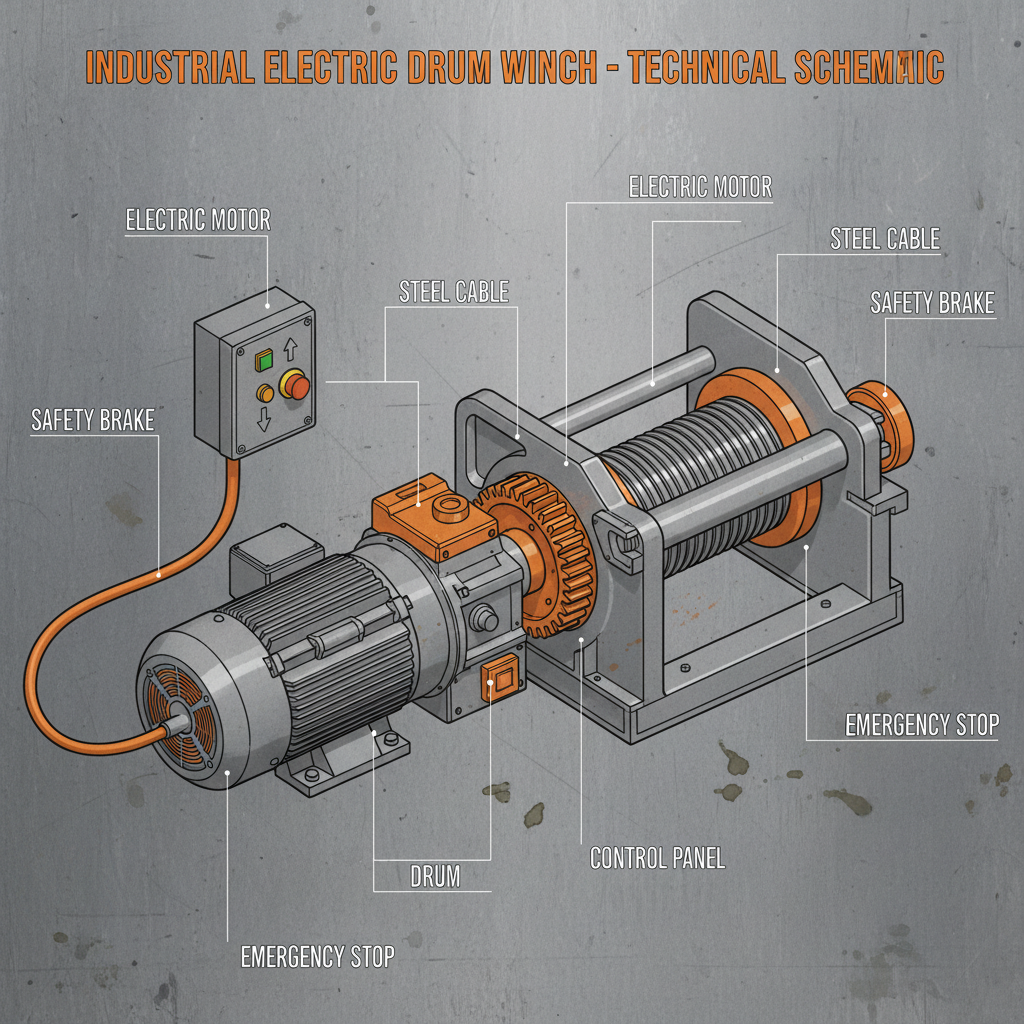
When it comes to light-to-medium duty lifting and pulling, the 2000 lb electric winch stands as a pivotal tool for both industrial maintenance and recreational utility. These compact powerhouses bridge the gap between manual labor and heavy-duty machinery, offering a precise, motorized solution for moving loads that are too heavy for a person but don't require a massive industrial crane.
Globally, the demand for efficient material handling has surged as logistics and DIY automation become more integrated. The versatility of a 2000 lb electric winch allows it to be deployed across various sectors, from automotive recovery and boat launching to small-scale warehouse organization, ensuring that productivity remains high while physical strain on operators is minimized.
Understanding the nuances of these devices—ranging from their motor efficiency to their braking systems—is essential for maximizing operational safety and longevity. By choosing the right 2000 lb electric winch, users can ensure a seamless integration of power and control, transforming challenging lifting tasks into simple, push-button operations.
Global Industrial Relevance of 2000 lb Electric Winches
In the modern manufacturing landscape, the 2000 lb electric winch serves as a critical component for optimizing small-scale assembly lines and maintenance bays. According to ISO standards for lifting equipment, the integration of motorized winches significantly reduces workplace injuries related to musculoskeletal strain, making the 2000 lb capacity a "sweet spot" for versatility across diverse industries.
From the shipping ports of Southeast Asia to the automated workshops of Northern Europe, these devices address the universal challenge of precise load positioning. The global shift toward lean manufacturing means that having a reliable, compact 2000 lb electric winch allows operators to move components without the need for massive overhead infrastructure, thereby increasing floor space efficiency.
Technical Definition and Functional Meaning
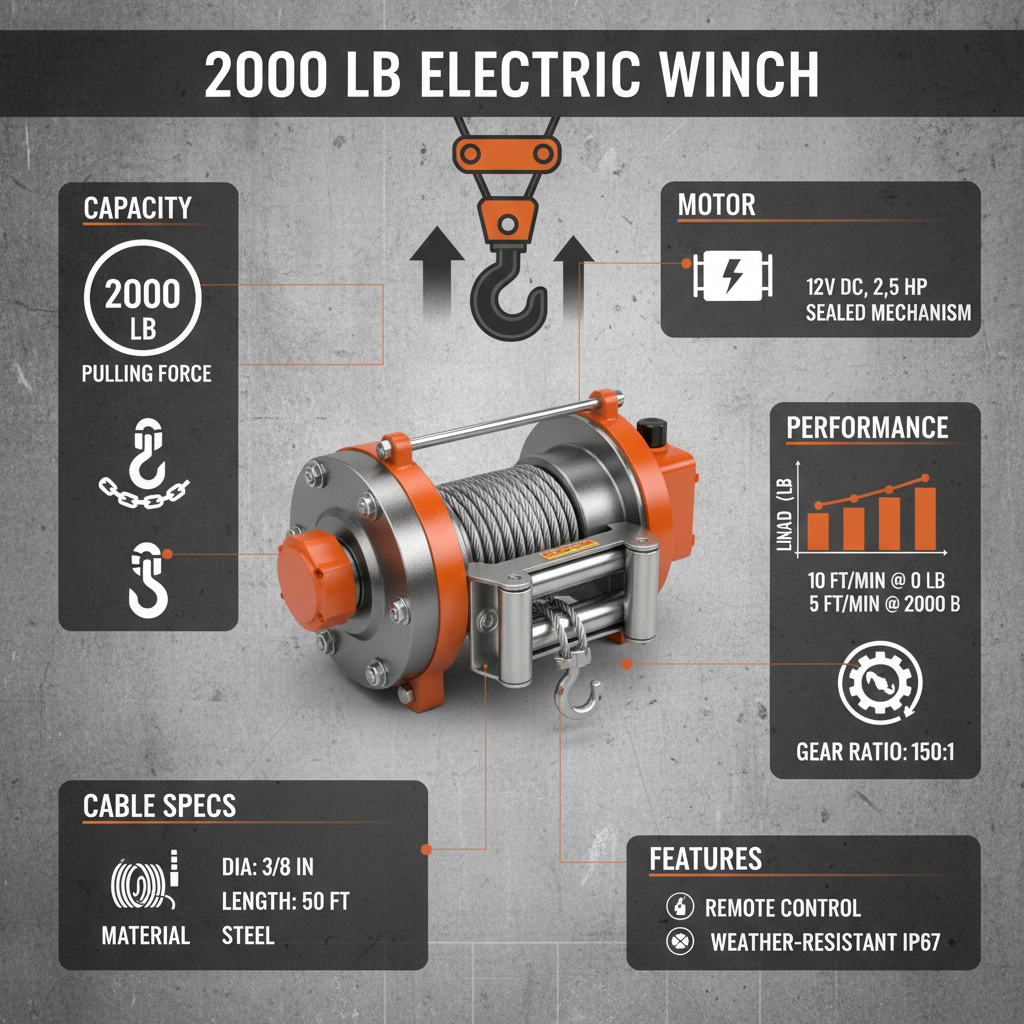
A 2000 lb electric winch is a mechanical device powered by an electric motor that winds or unwinds a cable or rope around a cylindrical drum to pull or lift a load. The "2000 lb" designation refers to the maximum rated capacity (pulling force) the device can handle under ideal conditions, typically measured at the first layer of the drum.
Unlike manual winches that rely on physical cranking, the electric variant utilizes a gear reduction system to convert high-speed motor rotation into high-torque pulling power. This makes the 2000 lb electric winch an indispensable tool for modern humanitarian needs, such as deploying emergency shelters or retrieving equipment in disaster-stricken areas where manual labor is insufficient.
Functionally, these winches are categorized by their duty cycle—the amount of time they can operate without overheating. For a 2000 lb electric winch, the balance between motor size and torque ensures that it remains portable enough for mobile installations while remaining powerful enough for consistent industrial use.
Core Components Driving Performance
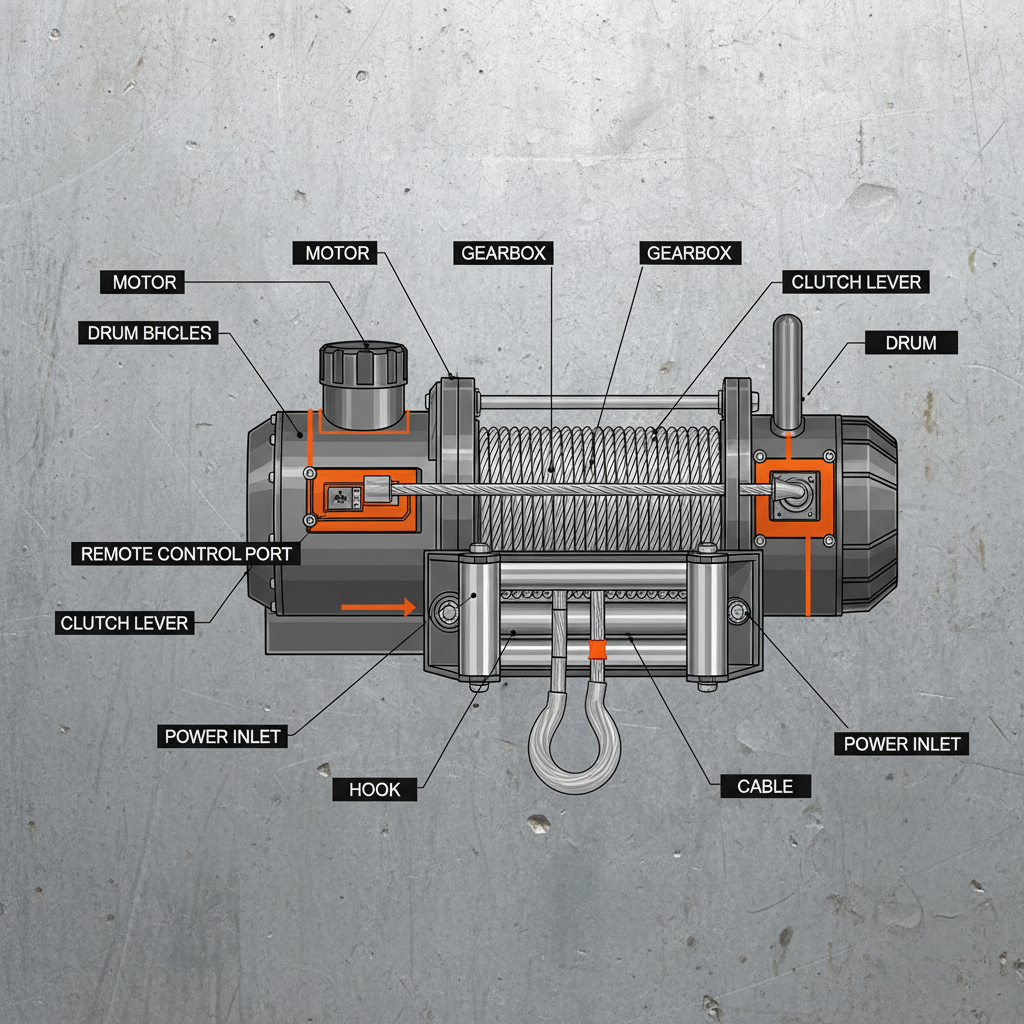
The durability of a 2000 lb electric winch is primarily rooted in its planetary gear system. This component allows the winch to multiply the torque generated by the electric motor, ensuring that the 2000 lb limit is reached smoothly without straining the electrical system or causing cable slippage.
Material selection is equally crucial; high-grade steel drums and synthetic or galvanized cables ensure that the 2000 lb electric winch can withstand corrosive environments. The inclusion of an automatic load-holding brake is a safety imperative, preventing the load from slipping back when power is disconnected.
Finally, the control system—whether it be a wired remote or a wireless transmitter—defines the operational flexibility of the 2000 lb electric winch. Modern units often feature thermal overload protection, which shuts down the motor if it exceeds a safe temperature, thereby extending the overall lifespan of the machine.
Performance Metrics and Efficiency Comparison
Evaluating the efficiency of a 2000 lb electric winch requires looking at the relationship between line speed and pulling force. As more cable is wound onto the drum, the effective pulling capacity decreases, a technical reality that users must account for during heavy-duty deployments.
When compared to hydraulic alternatives, the electric winch offers superior ease of installation and lower maintenance costs, although it relies heavily on the stability of the DC power source. The following data highlights how different configurations of the 2000 lb electric winch perform across key operational metrics.
2000 lb Electric Winch Configuration Efficiency
Global Applications and Real-World Use Cases
In the realm of automotive and marine logistics, the 2000 lb electric winch is frequently used for loading lightweight watercraft onto trailers or recovering ATVs from difficult terrain. In North America and Australia, these winches are staples in off-road recovery kits, providing a lifeline for drivers in remote wilderness areas where traditional towing services are unavailable.
Beyond recreation, the industrial application of a 2000 lb electric winch is evident in small-scale fabrication shops. They are often integrated into custom jigs to pull metal sheets into alignment or to hoist small engine components for inspection. In post-disaster relief operations, NGOs use these compact winches to clear light debris from roadways, enabling faster access for medical teams.
Long-Term Value and Operational Advantages
Investing in a high-quality 2000 lb electric winch offers significant long-term financial value by reducing the need for additional manpower. The logical advantage is clear: replacing three people pulling a load with one person operating a switch increases speed and drastically lowers the risk of workplace accidents.
From an emotional standpoint, the reliability of a professional-grade winch provides "peace of mind." Whether it's a boat owner knowing their vessel is secure during a launch or a factory manager trusting that a load won't slip, the trust established through consistent performance is an intangible but vital asset.
Furthermore, the sustainability of electric power over combustion-based pulling systems aligns with global green initiatives. A 2000 lb electric winch produces zero local emissions, making it suitable for indoor use in enclosed warehouses where air quality is a priority.
Future Innovations in Electric Winch Technology
The future of the 2000 lb electric winch is heading toward complete digitalization. We are seeing the emergence of "smart winches" equipped with load sensors that provide real-time data to a smartphone app, alerting the operator when the 2000 lb limit is being approached to prevent cable failure.
Material science is also evolving, with carbon-fiber reinforced drums and ultra-high-molecular-weight polyethylene (UHMWPE) ropes replacing traditional steel. These innovations make the 2000 lb electric winch lighter and safer, as synthetic lines do not store as much kinetic energy as steel, reducing the danger of "snap-back" during a break.
Additionally, the integration of lithium-iron-phosphate (LiFePO4) battery packs is allowing these winches to operate independently of vehicle power, creating truly portable lifting stations. This shift toward autonomy and intelligence ensures that the 2000 lb electric winch will remain relevant in an era of automation.
Analysis of 2000 lb Electric Winch Technical Specifications and Market Tiers
| Product Tier |
Motor Type |
Durability Score (1-10) |
Primary Application |
| Entry-Level |
Brushed DC |
5 |
Light DIY/Home Use |
| Standard Commercial |
Permanent Magnet |
7 |
Boat Launching |
| Industrial Grade |
Brushless DC |
9 |
Warehouse Logistics |
| Off-Road Special |
High-Torque DC |
8 |
ATV/UTV Recovery |
| Precision Series |
Stepper-Controlled |
6 |
Laboratory/Medical |
| Heavy Duty Custom |
Enhanced Core DC |
10 |
Mining Maintenance |
FAQS
Yes, for most standard ATVs and UTVs, a 2000 lb electric winch is sufficient. However, it is important to remember that if the vehicle is deeply bogged in mud, the resistance may exceed the rated capacity. Using a snatch block to double the pulling power can help overcome these challenges safely.
We recommend a full inspection every 3-6 months or after any heavy-duty use. Key maintenance includes checking the cable for frays, lubricating the gear housing, and ensuring the electrical connections are tight and corrosion-free to maintain peak performance.
Absolutely. Synthetic ropes are lighter, easier to handle, and significantly safer in the event of a cable snap. Just ensure the rope is rated for at least 2000 lbs (or higher to account for safety factors) and is compatible with your winch drum diameter.
Overloading a 2000 lb electric winch can lead to several issues: the motor may overheat and trip the thermal protection, the cable could snap, or the gears could strip. Always use a load spreader or a pulley system if you suspect the load exceeds the rated capacity.
Yes, they are ideal for indoor use because they are powered by electricity and produce no exhaust fumes. Their compact size makes them easy to mount on mobile carts or permanent workstations for moving lightweight machinery and inventory.
Wired remotes are generally more durable and reliable in extreme weather, but wireless remotes offer far greater safety by allowing the operator to stand at a safe distance from the load, which is highly recommended when using a 2000 lb electric winch in unpredictable environments.
Conclusion
The 2000 lb electric winch represents the perfect intersection of compact design and practical power. By analyzing its core components, global applications, and the shift toward smart technology, it is evident that this tool is far more than a simple pulling device—it is an efficiency multiplier for industries ranging from automotive recovery to warehouse logistics.
As we move toward a future defined by automation and sustainable power, investing in high-quality lifting equipment becomes a strategic advantage. Whether you are enhancing workplace safety or upgrading your recreational gear, choosing a reliable 2000 lb electric winch ensures you have the strength and control to handle any challenge. Visit our website for more professional solutions: www.lbswinch.com