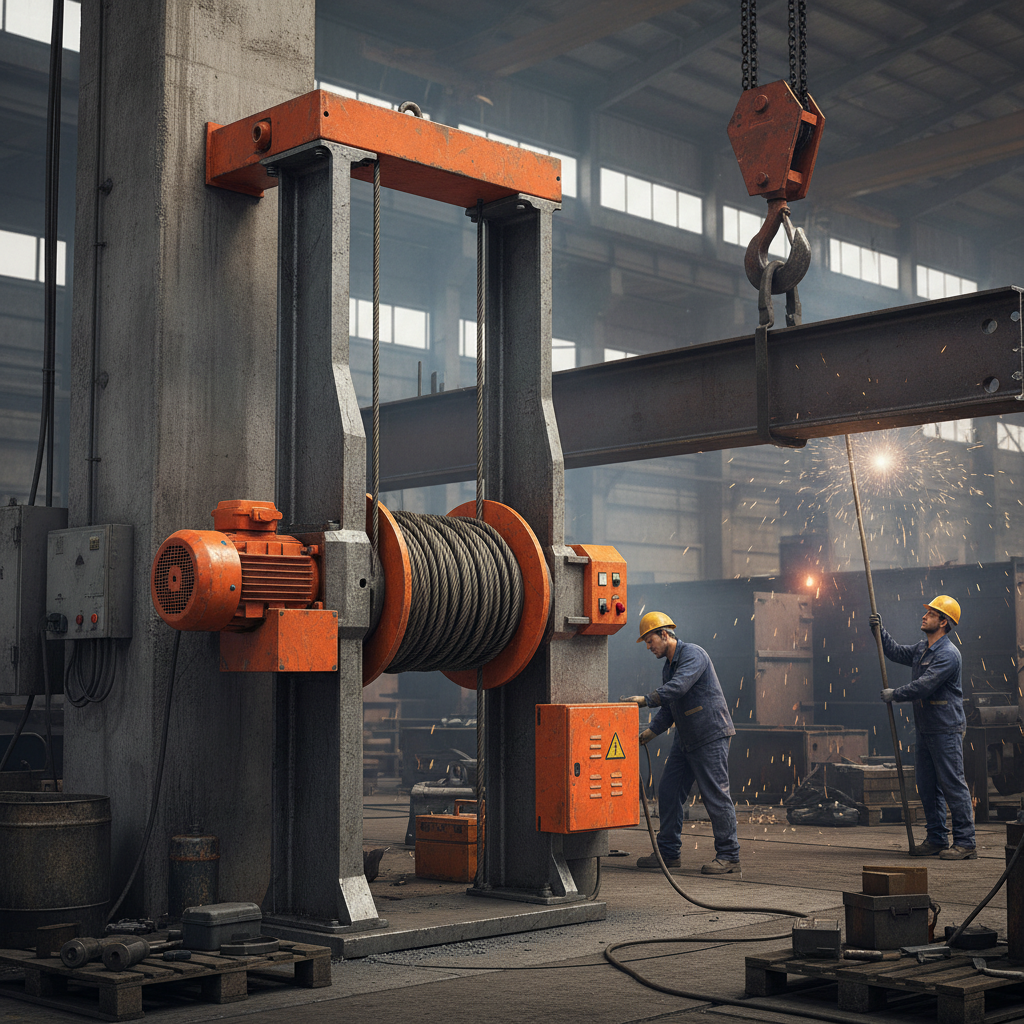
When procurement managers evaluate the steel gear price, the conversation often centers on raw material costs. However, in heavy-duty lifting and winching industries, the initial purchase price is frequently a secondary metric compared to the long-term operational cost of the entire cable management system.
The volatility of alloy steel markets directly impacts the pricing of precision-machined components, but the true financial drain in lifting operations comes from wire rope degradation. When steel ropes are wound haphazardly on smooth drums, the resulting "rope biting" and irregular layering lead to premature failure and costly unplanned downtime.
To maximize ROI, industries are shifting their focus from simple component pricing to "system efficiency." By integrating advanced grooving technologies, operators can significantly extend the lifecycle of their consumables, effectively offsetting higher upfront equipment costs through reduced maintenance cycles.


The pricing of steel components in the lifting machinery sector is not merely a reflection of weight and material. It incorporates the cost of heat treatment, machining tolerances, and the specialized geometry required for high-stress environments. For instance, a standard smooth drum is cheaper to produce, but it lacks the capacity to control rope tension during multi-layer winding.
When analyzing the steel gear price or the cost of a grooved drum, one must account for the "invisible cost" of rope damage. In petroleum and mining machinery, the cost of replacing a high-tonnage steel wire rope often dwarfs the price difference between a basic drum and a precision-grooved sleeve.
Orderly winding is the cornerstone of safety in crane and winch operations. In smooth drums, the wire rope tends to shift laterally, leading to "rope biting," where upper layers crush the lower layers during heavy loads. This creates localized stress points that drastically reduce the breaking strength of the steel cable.
The introduction of the Lebus groove system transforms this dynamic. By creating a precise geometric path for the rope, the load is distributed evenly across all layers. This eliminates the irregular winding that typically causes mechanical jams and prevents the rope from slipping or overlapping, which is critical for deep-sea oil drilling and mining shafts.
From a design perspective, the complexity of these grooves increases the machining time. This is why high-end lifting machinery often employs specialized sleeves. Instead of machining the entire drum, a precision-grooved sleeve is produced and then secured to the drum body via welding or bolting, combining structural strength with surface precision.
The strategic use of Grooved Sleeves represents a shift toward modular maintenance in the lifting industry. Traditionally, when a drum's surface wore down, the entire drum had to be replaced or re-machined on-site, causing significant operational downtime.
Implementing a replaceable sleeve system allows operators to replace only the wearing surface rather than the entire drum assembly, potentially reducing replacement costs by up to 500% over the equipment's lifecycle.
These sleeves, manufactured from high-grade steel or nylon, are tailored to the specific diameter of the wire rope. By splitting the sleeve into two 180-degree pieces, manufacturers can improve machining efficiency and simplify the installation process, ensuring that the winding remains neat regardless of the total rope length.
When evaluating the cost-benefit ratio of different drum types, a qualitative scoring model reveals a clear trend. While the initial investment in a Lebus-style grooved drum is higher than that of a spiral or smooth drum, the reduction in "cost per meter" of rope used creates a rapid break-even point.
The following index compares the relative performance of spooling systems across five key operational metrics, where a higher value indicates better performance (e.g., lower wear or higher safety).
In a typical industrial setting, such as an offshore oil platform or a deep-pit mine, the failure of a winch drum can stop production entirely. Companies like Sany and various national oilfields have integrated grooved drum assemblies to avoid the chaos of disorderly rope replacement. These environments require drums that can handle extreme tonnage while maintaining a precise winding pattern to prevent rope snap.
For buyers, the selection process involves balancing the specific requirements of the cable—such as whether it is a standard steel wire or a specialized folding cable—with the mechanical limits of the winch. The ability to customize the sleeve to the exact wire rope size ensures that the system operates at peak efficiency, reducing the risk of equipment shutdown.
The industry is moving away from monolithic equipment design toward modular components. The transition from smooth drums to spiral grooved drums, and eventually to Lebus-style grooved sleeves, mirrors the broader engineering trend of "targeted reinforcement." Instead of making the whole machine more expensive, engineers focus the investment on the critical contact points where wear occurs.
Modern maintenance strategies now prioritize the "Sleeve-First" approach. When inspection reveals wear in the rope groove, the outer sleeve is detached and replaced. This not only saves the cost of a full reel replacement but also reduces the technical labor required for on-site installation, as the core drum remains undisturbed.
Future developments are likely to focus on hybrid materials—combining the durability of steel with the low-friction properties of advanced polymers—to further extend the life of the wire rope. As precision machining becomes more accessible, the gap in the initial steel gear price and grooved drum costs will likely narrow, making high-efficiency spooling the standard for all industrial winches.
Choosing the right drum system requires a trade-off analysis between upfront capital expenditure and long-term operational expenditure (OPEX). A smooth drum may appear attractive on a budget sheet, but the accelerated wear on expensive steel ropes often leads to a higher Total Cost of Ownership (TCO).
The decision framework should consider the frequency of rope replacement, the criticality of the equipment (whether it is a primary lift or a secondary auxiliary), and the available downtime for maintenance. For high-utilization machinery in ports or mining, the precision of a grooved sleeve is an insurance policy against catastrophic failure.
Below is a relative suitability matrix designed to help engineers choose the appropriate spooling solution based on their specific operational constraints.
| Drum Type | Upfront Cost | Rope Lifespan | Best Use Case |
|---|---|---|---|
| Smooth Drum | Low | Short | Light Duty / Short Ropes |
| Spiral Grooved | Medium | Medium | Standard Industrial Lifting |
| Lebus Grooved | High | Long | Heavy-Duty / Deep-Sea / Mining |
| Grooved Sleeve | Medium-High | Long | High-Maintenance/Modular Ops |
| Nylon Sleeve | Medium | Medium-Long | Corrosive / Low-Friction Needs |
| Custom Alloy | Very High | Maximum | Extreme Tonnage / Military |
A smooth drum has a flat surface, meaning the rope is held in place only by the tension of the previous layer. This often leads to "nesting" or overlapping, which damages the rope. A grooved drum, particularly one using a Lebus system, has precision-machined paths that force the rope to wind in a neat, orderly fashion. This prevents rope biting and ensures that the load is evenly distributed across the entire width of the drum, significantly extending the rope's service life.
The primary reason is maintenance efficiency. Machining an entire drum is time-consuming and expensive. A grooved sleeve acts as a sacrificial wear layer. When the grooves become worn, only the sleeve needs to be replaced rather than the entire drum assembly. This reduces the cost of replacement by a substantial margin and drastically cuts down the equipment's downtime, as sleeves can be bolted or welded on much faster than a full drum replacement.
Material selection depends on the operational environment. Steel sleeves provide maximum durability and are essential for extremely heavy loads and high-abrasion environments. Nylon sleeves, on the other hand, offer lower friction and are more resistant to corrosion, making them suitable for specific marine or chemical environments. The choice depends on the balance between the required load-bearing capacity and the need for corrosion resistance or friction reduction.
Yes, the initial purchase price is higher due to the complexity of the machining process and the specialized materials required. However, this is a "value investment." The higher upfront cost is quickly offset by the savings in wire rope replacement and the avoidance of production losses caused by rope failure. In high-cycle industrial applications, the cost per hour of operation is actually lower with a grooved system than with a smooth one.
While most drums can be adapted, it requires precise engineering. The sleeve must be manufactured to match the exact dimensions of the existing drum and the specific diameter of the rope being used. This often involves a custom design phase where the rope's winding pattern is calculated to ensure the sleeve provides the correct guidance. Professional on-site installation is usually recommended to ensure the sleeve is perfectly aligned.
The most common misconception is that the steel gear price or drum price is purely a function of material weight. In reality, the value lies in the precision. A gear or drum that is machined to a tighter tolerance or features a complex grooving system may weigh the same as a basic one but will perform significantly better under stress, reducing the wear on all other connected components in the drivetrain.
Optimizing the cost of lifting equipment requires a shift in perspective from "acquisition cost" to "lifecycle value." While precision-grooved drums and sleeves demand a higher initial investment, their ability to preserve the integrity of expensive steel wire ropes makes them the most economical choice for high-load industrial operations.
By adopting modular solutions like replaceable grooved sleeves, companies can minimize downtime and ensure a higher safety standard. Ultimately, the integration of precision engineering into winch drums is not just a technical upgrade, but a strategic financial decision to lower the total cost of ownership in heavy machinery.