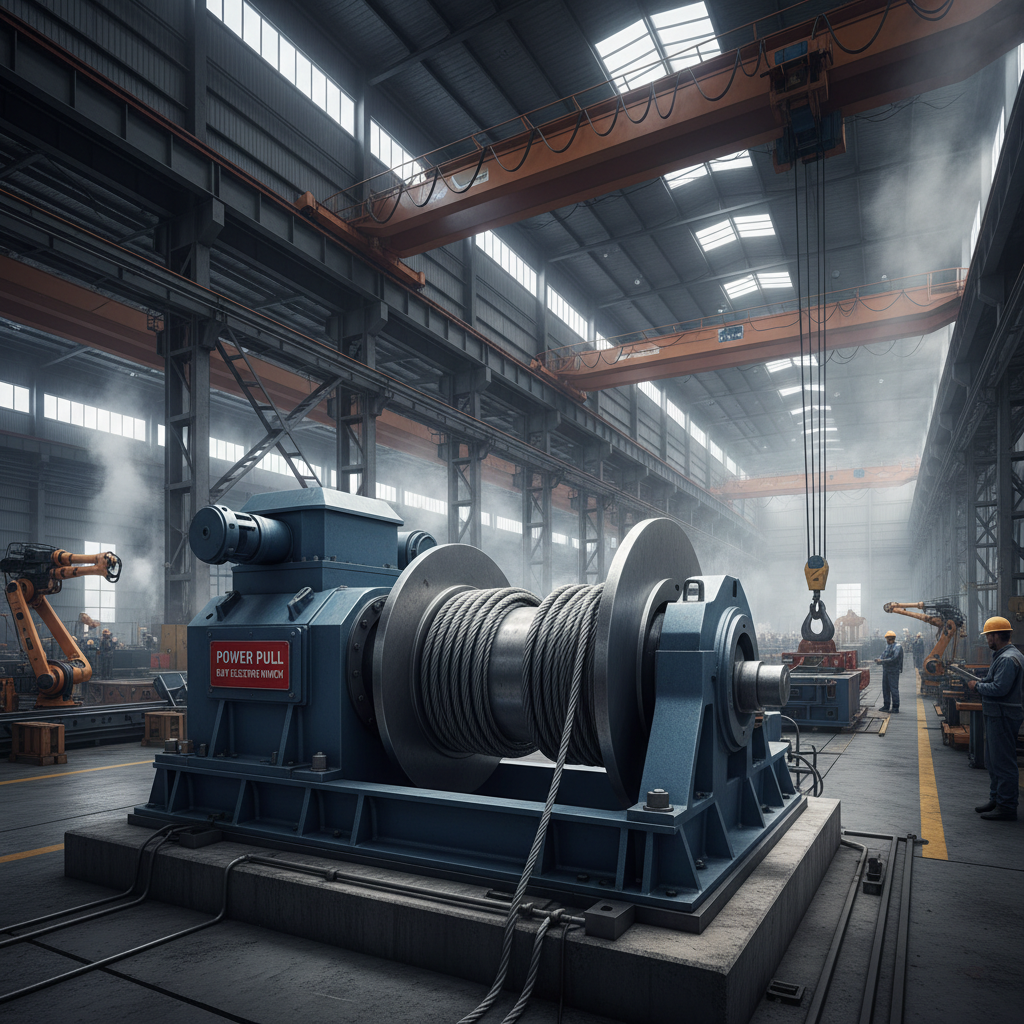
The global demand for high-capacity lifting systems has led to a significant technical evolution in the design and procurement of the china hydraulic winch, particularly for heavy-duty industrial applications. As project scales increase in offshore and mining sectors, the industry is shifting from basic winch designs to specialized systems that prioritize rope longevity and winding precision.
Maintaining structural integrity under extreme tension remains a primary engineering challenge. The friction and wear associated with multi-layer wire rope winding often lead to premature cable failure, which increases operational downtime and maintenance costs for B2B operators in the construction and energy sectors.
This analysis examines the critical role of grooved drum technology in enhancing hydraulic winch performance. By exploring the relationship between rope slotting and winding efficiency, we provide a technical framework for evaluating a china hydraulic winch to ensure long-term reliability in demanding environments.


Modern heavy-lifting systems utilize a specialized "double fold line wire rope groove" to manage multi-layer production. This technique ensures that the rope groove remains largely parallel to the flange end face across the drum circumference, minimizing the area where the section intersects the flange.
By implementing this specific geometry, the bending stress on the wire rope is redistributed, preventing the common issue of "crushing" in the inner layers. This is essential for any china hydraulic winch operating in high-tension environments.
The efficiency of a hydraulic winch is not solely determined by its pulling force, but by the precision of its rope arrangement. Gear reducers are typically employed to provide the necessary torque and steady power delivery, ensuring that the material hoist operates without abrupt jerks or slippage.
From a material perspective, the use of welded plain drums combined with welded grooved shells allows for a modular approach to maintenance. If a sleeve becomes worn, replacing only the grooved shell significantly reduces operational expenses compared to replacing the entire drum assembly.
Key parameters such as rope diameter and slot depth must be mathematically aligned. Misalignment in these specifications leads to uneven winding, which creates localized pressure points on the wire rope, accelerating fatigue and increasing the risk of catastrophic failure during lifting.
One of the primary conflicts in winch engineering is the trade-off between storage capacity and rope protection. Standard smooth drums often suffer from "bird-caging" or overlapping, where the rope jumps layers under load, potentially trapping the cable.
This engineering approach is critical for applications involving large tonnage cranes where stability is non-negotiable. The integration of these grooved sleeves transforms the china hydraulic winch from a simple pulling tool into a precision instrument for industrial lifting.
When evaluating the efficacy of hydraulic winches, engineers use normalized scores to compare different configurations across critical categories such as winding stability, wear resistance, and maintenance ease.
The following data represents a relative engineering assessment of grooved drums versus smooth drums across five key operational dimensions.
In offshore platform cranes and oil workover drilling, the environment is characterized by corrosive salt spray and extreme fluctuating loads. A china hydraulic winch with grooved sleeves is preferred here because it prevents rope slippage during critical hoisting operations, which could otherwise lead to catastrophic accidents.
Similarly, in mining and forestry, where winches are used for flat dragging and material lifting in rugged terrain, the gear-reducer driven LBS series provides the reliability needed for automated operations. These systems are often integrated as auxiliary equipment for modern automated cranes, allowing for precise control over material movement in confined spaces.
The trajectory of hydraulic winch development is moving toward higher integration with digital monitoring. Future iterations are expected to include embedded sensors within the grooved sleeves to monitor rope tension and wear in real-time, moving from scheduled maintenance to predictive maintenance.
Another emerging trend is the optimization of alloy steel compositions for drum sleeves. By increasing the hardness and corrosion resistance of the shell, manufacturers can further extend the interval between sleeve replacements, reducing the total cost of ownership for B2B clients.
Additionally, there is a growing focus on "green hydraulics," where energy recovery systems are integrated into the winch drive to capture energy during the lowering phase of a load, improving the overall energy efficiency of the lifting operation.
Selecting the correct winch configuration requires a balance between the required lift capacity and the operational environment. A standard smooth drum may suffice for light-duty, single-layer applications, but heavy-duty cycles necessitate grooved architectures.
Buyers should evaluate the "Double Fold Line" capability if their operation involves frequent multi-layer winding, as this directly correlates to the lifespan of the wire rope and the safety of the load.
The following matrix provides a comparative framework for different configuration profiles based on typical industry requirements.
| Configuration Profile | Drum Type | Primary Performance Factor | Recommended Use Case |
|---|---|---|---|
| Basic Configuration | Smooth Drum | Low-cost implementation | Light utility lifting |
| Standard Configuration | Partial Groove | Moderate winding stability | General construction |
| High-Duty Configuration | Full Grooved Sleeve | Maximum rope protection | Offshore platform cranes |
| Precision Configuration | Double Fold Line | High-precision multi-layering | Oil workover drilling |
| Automated Configuration | Gear-Reducer Integrated | Consistent torque delivery | Modern automated factories |
| Industry Baseline | Standard Steel Shell | General durability | Mining and forestry |
The primary benefit is the reduction of rope deformation during multi-layer winding. By keeping the groove parallel to the flange end face in most sections, it prevents the wire rope from bending sharply or crushing the inner layers under heavy tension, which significantly extends the operational life of the cable.
Yes. A typical LBS-built drum consists of a welded plain drum and a welded grooved shell. In the event of wear or malfunction, only the sleeves need to be replaced, which drastically reduces maintenance costs and downtime compared to a full drum replacement.
A gear reducer drive system is highly recommended for heavy-duty applications. It provides a reliable means of powering material hoists by converting high-speed hydraulic input into high-torque output, ensuring smooth winding and lifting even under maximum load capacities.
Bird-caging occurs when the rope is not wound tightly or overlaps randomly. Grooved drums eliminate this by providing a fixed mechanical path for the rope. This ensures each wrap is seated correctly, maintaining constant tension and preventing the rope strands from shifting or bulging.
High-performance sleeves are generally manufactured from alloy steel to provide a balance of strength and wear resistance. Depending on the application, they may undergo specific heat treatments or surface coatings to resist corrosion in marine or mining environments.
The choice depends on the winding depth. If the application requires only a few layers of rope, a smooth drum is cost-effective. However, for deep-winding applications or high-tonnage lifting where safety and rope longevity are critical, a grooved drum is the only viable engineering choice.
The transition toward precision-grooved drums represents a critical shift in the china hydraulic winch industry, moving away from generic hardware toward application-specific engineering. By prioritizing the mechanical interaction between the drum surface and the wire rope, operators can achieve higher safety margins and lower long-term operational costs.
For B2B procurement managers, the focus should remain on the compatibility of the drum's groove geometry with the specific wire rope specifications used in their fleet. Investing in modular grooved systems ensures that the equipment can evolve with the operational needs of the project without requiring complete system overhauls.